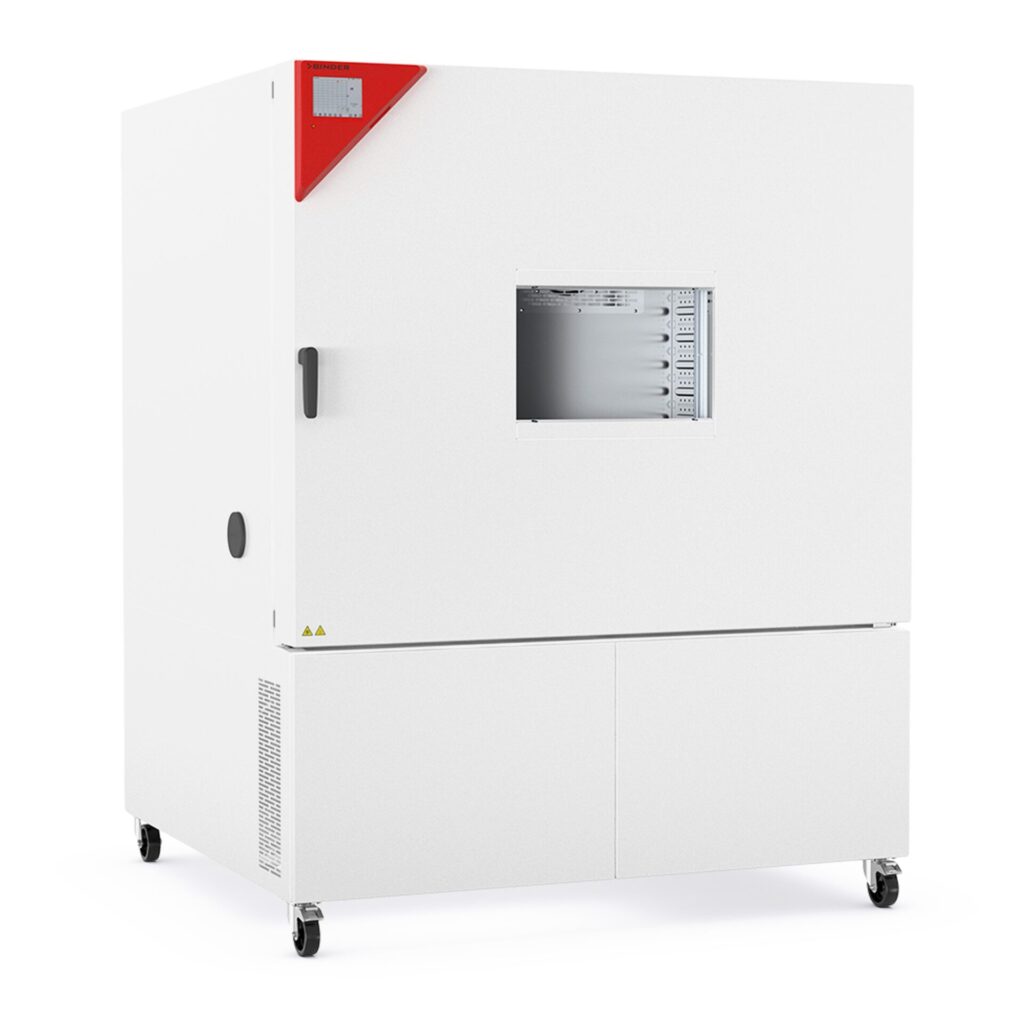
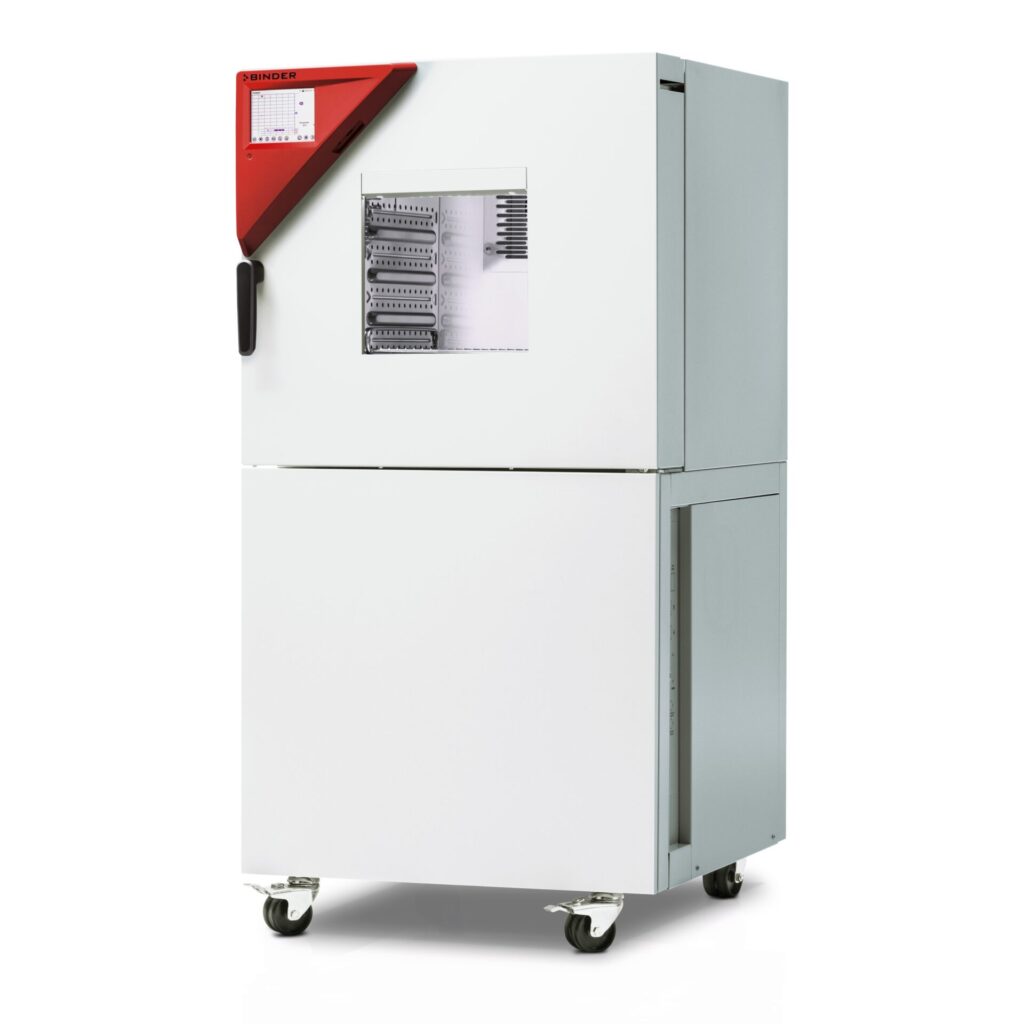
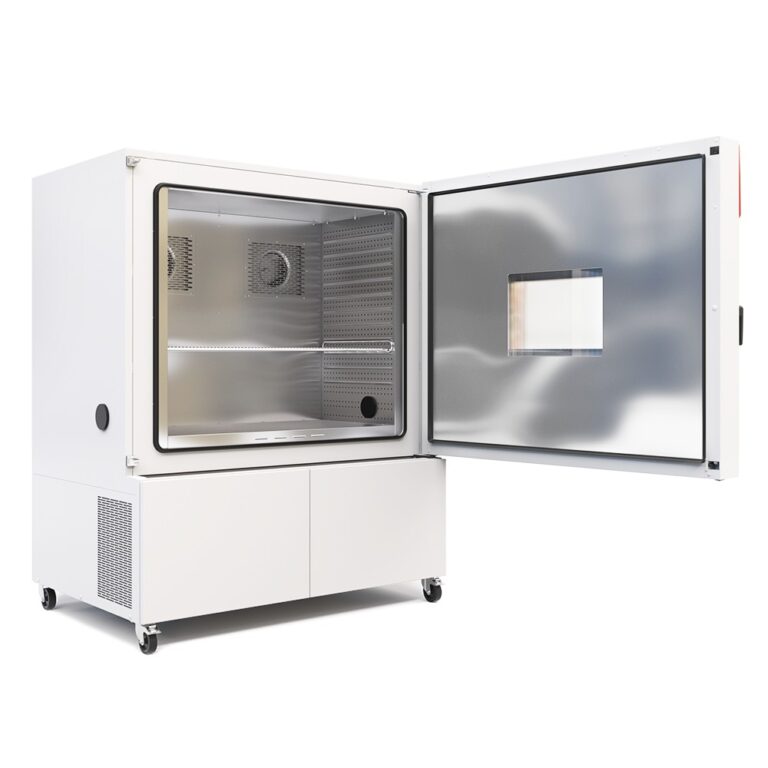
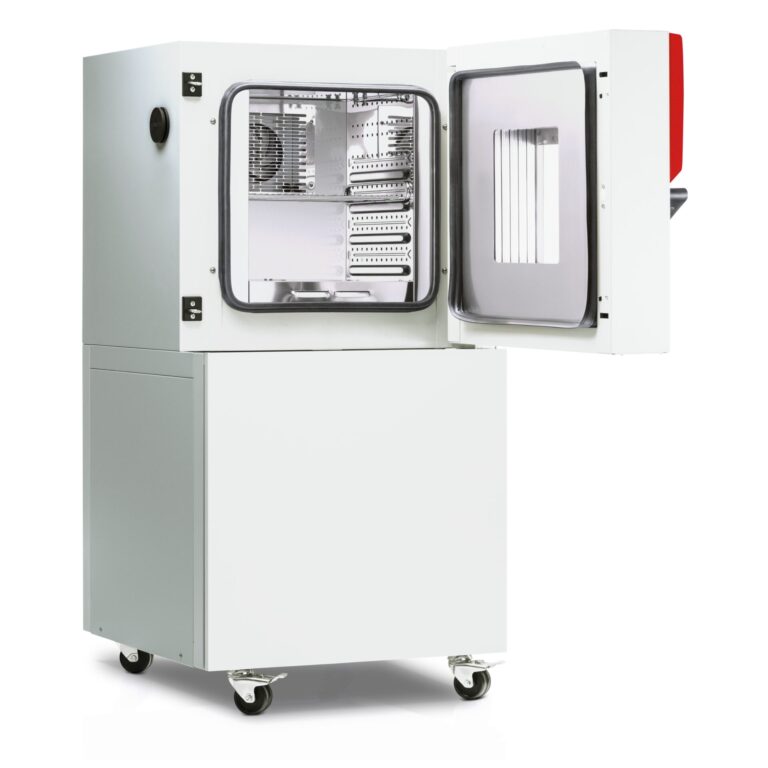
What is a Climate Test Chamber?
Climate test chambers – also known as environmental test chambers – are specifically designed to generate controlled temperature and humidity profiles. Unlike constant climate chambers, which maintain stable conditions, climate test chambers are designed to simulate changing climatic conditions. Both gradual and rapid temperature changes as well as defined humidity cycles can be programmed. These dynamic conditions are essential for analysing the behaviour of materials and products under realistic environmental stresses.
Benefits of Climate Test Chambers
Climate test chambers combine technical precision, reliability, and user-friendly operation. They enable rapid and precisely controlled temperature changes while providing accurate humidity control and uniform climatic conditions throughout the chamber.
This allows even complex test profiles to be carried out reliably and reproducibly – a key advantage for demanding applications in research, development, and quality assurance. Modern control systems make it easy to program individual test cycles while continuously monitoring all relevant parameters.
Another key advantage is standards-compliant testing: technologies that ensure uniform climate distribution create stable and reproducible test conditions, which are essential for reliable and comparable results.
The key benefits at a glance:
-
Rapid and precise temperature changes for dynamic testing
-
Accurate humidity control for realistic environmental conditions
-
Uniform climate distribution throughout the chamber
-
Reproducible test results for standards-compliant test procedures
-
Intuitive controls and flexible programming of test cycles
-
Comprehensive monitoring and documentation functions
Climate test chambers therefore provide an ideal basis for precise, efficient, and reliable environmental testing.
Realistic Simulation of Dynamic Temperature Changes
A key feature of climate test chambers is their ability to generate rapid and precisely controlled temperature changes. This allows materials and components to be subjected to defined thermal stresses similar to those encountered in real-world applications – for example, sudden temperature differences during transport, storage, and operation.
These cyclic temperature profiles help identify potential weaknesses at an early stage and provide valuable information for assessing product durability. Particularly in electronic components, plastics, and mechanical components, repeated temperature changes can lead to material fatigue, stress cracking, or loss of functionality.
By systematically simulating these conditions, potential causes of failure can be identified and addressed during the development phase. This not only reduces the risk of subsequent product failures but also contributes significantly to quality assurance and extended product service life.
Precise Humidity Control for Reliable Test Results
In addition to temperature, humidity is a critical factor in the simulation of environmental conditions. Climate test chambers enable precise control of relative humidity, creating realistic and reproducible test conditions.
Humidification and dehumidification are automatically controlled and continuously monitored. This enables reliable testing even of sensitive materials whose properties and performance are strongly influenced by moisture.
Precise humidity control is particularly important in materials testing, where defined climatic conditions are essential for obtaining meaningful and standards-compliant results.
Difference Between Constant Climate Chambers and Walk-In Chambers
Climate test chambers differ significantly from other environmental testing solutions. While constant climate chambers are designed to maintain stable conditions over extended periods, climate test chambers enable controlled and programmable changes in temperature and humidity.
Walk-In Chambers, on the other hand, provide significantly more test space and are primarily used for large test specimens, assemblies, or extensive test series.
Selecting the right climate test chamber should always be based on the specific requirements of the application. Key factors include the required temperature change rates, humidity range, and test chamber volume.
Requirements relating to standards, documentation, and energy efficiency also play an important role. Modern systems additionally offer a wide range of expansion and monitoring options that can make testing processes more efficient, transparent, and reliable.
At Schröder Industrieöfen, we will be happy to help you select the right climate test chamber for your application!
Frequently Asked Questions About Climate Test Chambers
What are climate test chambers used for?
They are used for materials, component, and product testing under dynamic temperature and humidity conditions.
What is the difference between a climate test chamber and a constant climate chamber?
Climate test chambers simulate controlled and programmable changes in temperature and humidity, while constant climate chambers maintain stable climatic conditions over extended periods.
Which industries use climate test chambers?
Typical applications can be found in the automotive, electronics, aerospace, research, and other industrial sectors.


 Deutsch